




Preparing for a healthcare job interview can feel overwhelming, especially if you’re entering the medical field for the first time. You may be wondering what questions employers will ask, how to explain your qualifications, or what to say when you don’t have previous healthcare experience.
The good news? You don’t need a perfect answer to every question. You need to demonstrate that you understand the importance of patient safety, communication, professionalism, teamwork, and continuous learning.
Whether you’re interviewing for a medical assistant, dental assistant, surgical technologist, or medical office position, preparation can help you communicate your strengths more confidently.
In this guide, we’ll explore 10 important healthcare interview questions and sample answers, explain what employers want to hear, and share practical tips to help you prepare for your next opportunity in the medical field.
What Are the Most Common Healthcare Interview Questions?
The most common healthcare interview questions focus on your motivation, ability to care for patients, communication skills, problem-solving abilities, and readiness to work in a medical environment.
Here are 10 important questions worth practicing before your interview:
| Interview question | What employers evaluate |
|---|---|
| 1. Tell me about yourself. | Background and communication |
| 2. Why do you want to work in healthcare? | Motivation and career goals |
| 3. Why should we hire you? | Skills and qualifications |
| 4. How would you handle a difficult patient? | Empathy and conflict resolution |
| 5. How do you handle stressful situations? | Composure and prioritization |
| 6. How do you protect patient confidentiality? | Professional ethics and HIPAA awareness |
| 7. Describe a time you worked on a team. | Collaboration |
| 8. How would you handle a medical mistake? | Honesty and patient safety |
| 9. What are your strengths and weaknesses? | Self-awareness |
| 10. Where do you see yourself in five years? | Commitment and professional growth |
These questions can appear in different forms depending on the healthcare position and facility. Preparing flexible, truthful answers is more effective than memorizing a script.

Ready to start your healthcare career?
Get program details, admission requirements, and personalized guidance from our team.
Request Program Information →10 Important Healthcare Interview Questions With Sample Answers
Preparing for common medical field interview questions can help you feel more confident and make a stronger impression. Here are 10 frequently asked questions, sample answers, and quick tips.
1. Tell Me About Yourself
Employers want a brief overview of your background, skills, and interest in healthcare.
Sample Answer: “I’m a detail-oriented person who enjoys helping others. I have strong communication and organizational skills, and I’m excited to develop my career in healthcare.”
Tip: Keep your answer under 60 seconds and focus on job-related strengths.
2. Why Do You Want to Work in Healthcare?
Employers want to understand your motivation and career interests.
Sample Answer: “I want to work in healthcare because I enjoy helping people and making a positive difference. I’m also interested in developing practical medical skills.”
Tip: Connect your motivation to the position you’re applying for.
3. Why Should We Hire You for This Medical Position?
This question helps employers evaluate your qualifications and potential.
Sample Answer: “I’m reliable, organized, and eager to learn. I pay attention to details, communicate well, and understand the importance of patient safety.”
Tip: Highlight two or three strengths that match the job description.
4. How Would You Handle a Difficult or Upset Patient?
Employers look for empathy, patience, and professional communication.
Sample Answer: “I would stay calm, listen to the patient’s concerns, and respond respectfully. If necessary, I would ask an appropriate team member for assistance.”
Tip: Emphasize active listening, empathy, and patient safety.
5. How Do You Handle Stressful Situations in Healthcare?
Healthcare employers value employees who remain focused under pressure.
Sample Answer: “I stay organized, prioritize urgent tasks, and communicate clearly with my team. I always follow safety procedures, even during busy situations.”
Tip: Show that you can manage pressure without compromising patient care.
6. How Do You Maintain Patient Confidentiality and Follow HIPAA Guidelines?
This question evaluates your understanding of patient privacy.
Sample Answer: “I follow HIPAA requirements and workplace policies, access patient information only when authorized, and never discuss confidential details in public.”
Tip: Mention practical ways to protect sensitive patient information.
7. Can You Describe a Time You Worked Successfully as Part of a Team?
Teamwork is essential in medical offices, hospitals, and clinics.
Sample Answer: “During a group project, I helped organize responsibilities and communicate with teammates. We completed our work successfully by supporting each other.”
Tip: Use a real example from school, training, or previous employment.
8. What Would You Do If You Made a Mistake at Work?
Employers want to see accountability and commitment to patient safety.
Sample Answer: “I would immediately report the mistake to the appropriate supervisor, follow safety procedures, and learn from the experience to prevent it from happening again.”
Tip: Demonstrate honesty and responsibility rather than claiming you never make mistakes.
9. What Are Your Greatest Strengths and Weaknesses?
This question measures self-awareness and willingness to improve.
Sample Answer: “My greatest strength is attention to detail. One weakness I’m working on is speaking confidently in unfamiliar situations, so I’ve been practicing my communication skills.”
Tip: Choose a job-related strength and a genuine, manageable weakness.
10. Where Do You See Yourself in Five Years in the Medical Field?
Employers want to understand your long-term professional goals.
Sample Answer: “I hope to become an experienced healthcare professional, strengthen my skills, and continue learning as I grow in my career.”
Tip: Focus on professional development and realistic career goals.
Ready to start your healthcare career?
Get program details, admission requirements, and personalized guidance from our team.
Request Program Information →How to Answer Healthcare Behavioral Interview Questions Using the STAR Method
Some interview questions for healthcare jobs ask you to describe how you’ve handled situations in the past. You may hear questions such as “Tell me about a time you resolved a conflict” or “Describe a situation where you had to work under pressure.”
A helpful way to structure these responses is the STAR method.
| STAR step | What to explain |
|---|---|
| Situation | What was happening? |
| Task | What was your responsibility? |
| Action | What specific steps did you take? |
| Result | What happened, and what did you learn? |
For example, suppose an interviewer asks, “Tell me about a time you handled multiple tasks under pressure.”
A candidate might explain that several customers needed assistance during a busy shift (Situation), they were responsible for maintaining accurate service while reducing delays (Task), they organized requests by urgency and communicated with coworkers (Action), and the team completed its responsibilities without overlooking important steps (Result).
This example doesn’t need to come from a healthcare workplace. It demonstrates transferable skills that can also matter in clinical and administrative environments.
The Association of American Medical Colleges recommends using specific experiences and the STAR approach when preparing for behavioral interviews.
Remember: The goal isn’t to memorize perfect stories. It’s to identify genuine examples that demonstrate the qualities employers are looking for.
Healthcare Interview Questions for Candidates With No Experience
What if you’re applying for your first medical job and haven’t worked in a healthcare facility?
You can still prepare meaningful answers by focusing on relevant experiences, transferable skills, education, and your willingness to learn.
Entry-level candidates should be ready for questions such as:
- Why are you interested in entering the healthcare field?
- What experience do you have working with people?
- How would you respond if you didn’t know how to complete a task?
- What have you done to prepare for this medical career?
- How do you learn new procedures or technologies?
Sample Answer: Why Should We Hire You if You Have No Healthcare Experience?
“Although I’m new to the healthcare field, I’ve developed strong communication, time-management, and teamwork skills through my previous experiences. I understand that healthcare requires accuracy, professionalism, and a commitment to learning. I’m interested in building the technical knowledge and practical skills needed to contribute responsibly, and I’m willing to receive feedback and continue improving.”
This approach shows potential without pretending to have qualifications you haven’t earned.
Can Healthcare Training Help You Prepare for Entry-Level Medical Jobs?
Relevant healthcare education can help candidates develop vocabulary, technical knowledge, and familiarity with professional procedures that may be discussed in interviews.
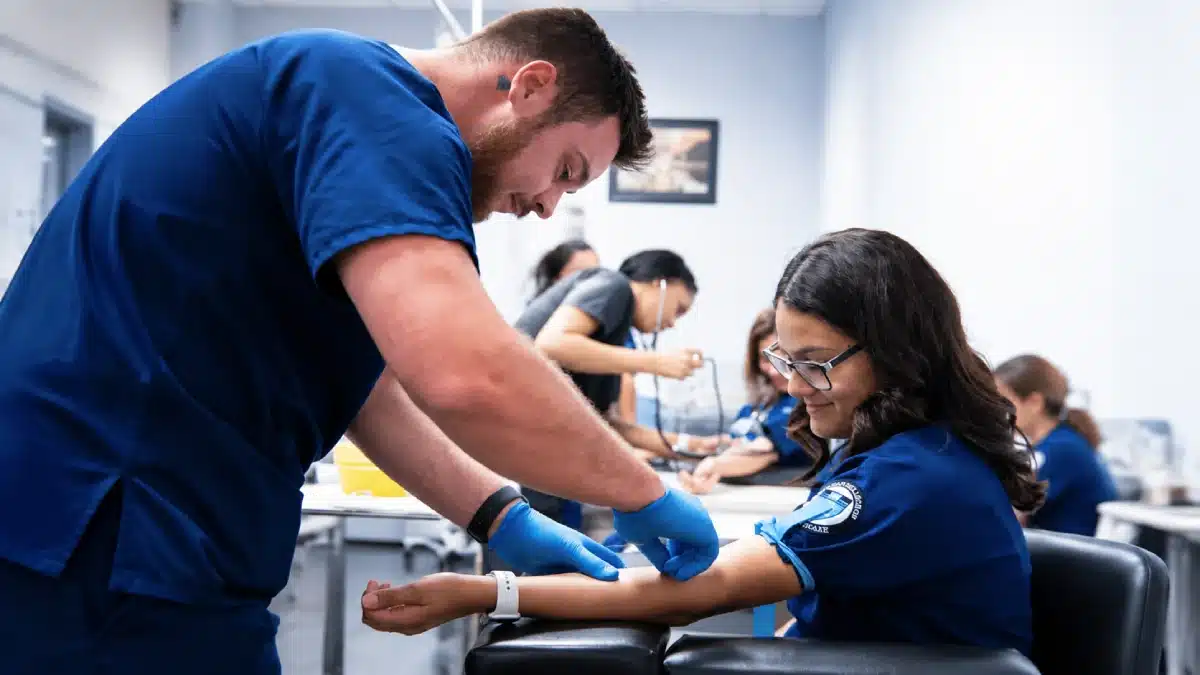
For example, a Medical Assistant training program can introduce students to both clinical and administrative responsibilities, helping them better understand what medical offices may expect from entry-level employees.
However, training alone doesn’t guarantee employment. Candidates still need to meet individual employers’ qualifications, demonstrate their skills, and prepare effectively for interviews.
Medical Field Interview Questions by Healthcare Career
Not every healthcare role requires the same knowledge. An applicant interviewing for a surgical technology position may encounter very different questions from someone applying for medical billing and coding.
Here are examples of role-specific interview topics.
| Healthcare career | Possible interview question | Important knowledge to demonstrate |
|---|---|---|
| Medical Assistant | How do you prepare a patient for an examination? | Communication, safety, clinical workflow |
| Dental Assistant | How do you help maintain infection prevention standards? | Instrument processing, PPE, dental office procedures |
| Surgical Technologist | What would you do if you noticed contamination of the sterile field? | Sterile technique, immediate communication, patient safety |
| Medical Billing and Coding | How would you respond to a claim denial? | Accuracy, documentation, payer procedures |
| Pharmacy Technician | How would you handle a possible prescription discrepancy? | Accuracy, scope of practice, pharmacist supervision |
| Veterinary Assistant | How would you approach a frightened animal? | Animal handling, safety, clinic protocols |
The appropriate answers depend on the job, the candidate’s qualifications, and the facility’s policies.
5 Common Healthcare Interview Mistakes to Avoid
Even well-qualified applicants can make mistakes when answering medical field interview questions.
Here are five to watch out for.
| Common mistake | Better approach |
|---|---|
| Giving vague answers | Use one specific example |
| Claiming skills you don’t have | Be accurate about your training |
| Speaking negatively about former coworkers | Focus on professionalism and lessons learned |
| Overlooking patient safety | Explain when you would seek help or follow protocols |
| Arriving without researching the employer | Review the facility and job responsibilities beforehand |
One particularly important mistake is trying to sound more experienced than you are.
Healthcare employers need accurate information about candidates’ qualifications. If you haven’t performed a particular procedure or used a specific electronic records system, explain what you know and how you would approach learning it under appropriate supervision.
How Healthcare Education Can Help You Build Job-Ready Skills
Preparing for a medical job interview is about more than knowing what to say. It also involves understanding the responsibilities behind your answers.
For example, it’s easier to discuss infection prevention when you’ve studied the relevant principles and practiced appropriate procedures in a supervised learning environment.
Similarly, learning medical terminology, documentation standards, patient communication, and professional workflows can help candidates connect interview questions to the actual responsibilities of healthcare positions.
Ready to start your healthcare career?
Get program details, admission requirements, and personalized guidance from our team.
Request Program Information →At the American College of Healthcare and Technology (ACHT), students can explore career-focused programs designed to develop practical knowledge and skills for healthcare and related careers.
Whether you’re interested in patient care, surgical support, dental assisting, or medical office operations, ACHT’s admissions team can help you learn about program options, training requirements, and the enrollment process.