
Summary: After graduating from college or a technical school you might be in for some interesting Group Interviews when you start applying for jobs. Group interviews can be intimidating for many candidates, knowing how to stand out and make the cut will make the group interview become less of a stress.
One mistake that many potential employees make is to size up your other group interviewees. Sizing up the opponents can make someone feel more self-conscious and nervous. This will ultimately show during the actual interview. On the contrary, making friends and small talk with your fellow interviewees, will make you feel more at ease and help you engage during the interview. Furthermore, involving everyone will help the group dynamic seem less tense and intimidating. Interactions with everyone will not only humanize the other potential employees, but also show the interviewers your personal skills.
In this guide, you will learn how to stand out in a group interview, what employers are looking for, common mistakes to avoid, and how healthcare training can help you prepare for success.

What Is a Group Interview?
A group interview is a hiring process where multiple candidates participate in the same interview session with one or more employers. Instead of evaluating candidates separately, employers observe how applicants communicate and interact in a group setting.
Depending on the employer and position, a group interview may include:
- Individual questions answered in front of other candidates
- Team discussions
- Problem-solving activities
- Workplace scenarios
- Group exercises
Employers use this format because it helps them understand how candidates behave in real workplace situations. They can evaluate communication skills, teamwork, confidence, and problem-solving abilities during the same interview process.
For healthcare positions, these observations are valuable because healthcare professionals rarely work alone. A successful employee must communicate effectively with patients, doctors, nurses, supervisors, and coworkers.

Ready to start your healthcare career?
Get program details, admission requirements, and personalized guidance from our team.
Request Program Information →How to Stand Out in a Group Interview: 10 Proven tips
A group interview gives employers the opportunity to evaluate more than just your answers. They are also looking at how you communicate, collaborate, solve problems, and interact with others. For healthcare positions, these qualities are especially important because professionals must work closely with patients, doctors, and team members every day. The following strategies can help you make a strong impression and show employers that you are prepared for a professional healthcare environment.
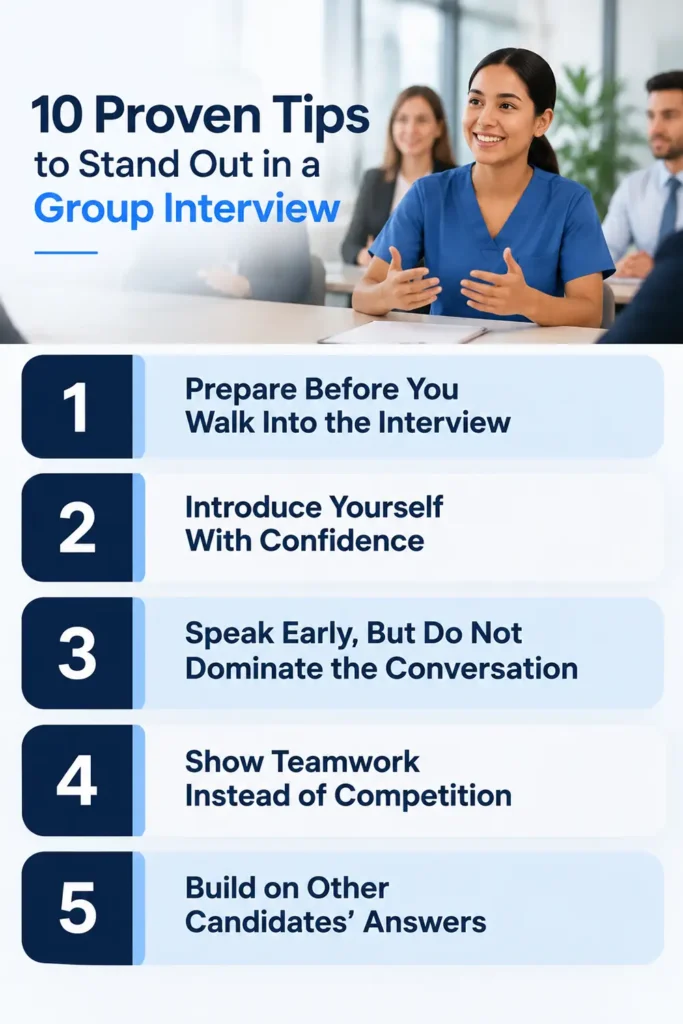
1. Prepare Before You Walk Into the Interview
Preparation is one of the best ways to build confidence before a group interview. Research the organization, understand the position you are applying for, and review common interview questions related to your career field. If you are a healthcare graduate, be ready to discuss your training, hands-on experience, clinical skills, and why you chose a career in healthcare.
2. Introduce Yourself With Confidence
Your first impression begins before you answer any interview questions. Introduce yourself clearly, make eye contact, and show a friendly and professional attitude toward both interviewers and other candidates. A confident introduction helps employers see that you are comfortable communicating with people, which is an essential skill in healthcare workplaces.
3. Speak Early, But Do Not Dominate the Conversation
One common mistake in a group interview is staying completely silent because you are waiting for the perfect moment. If you never participate, employers may not get a chance to see your communication skills. Try to contribute early by:
- Answering one of the first questions
- Sharing a relevant experience
- Adding a thoughtful comment
However, remember that standing out does not mean speaking the most. Employers are not looking for the loudest person in the room. They want someone who can communicate effectively while respecting others.
4. Show Teamwork Instead of Competition
Although other candidates may seem like your competition, a group interview is designed to evaluate how well you work with others. Show respect for different opinions, encourage participation, and focus on building a productive conversation. Healthcare employers are looking for team members who can collaborate and support others in a professional environment.
5. Build on Other Candidates’ Answers
Active listening can help you stand out during a group interview. Instead of repeating an answer that another candidate already gave, acknowledge their point and add your own perspective. This demonstrates that you can listen carefully, think critically, and contribute meaningful ideas to a team discussion.
6. Use Your Healthcare Training as an Advantage
Your education and hands-on training can help you create stronger interview answers. Talk about experiences that demonstrate your preparation for the healthcare field, such as clinical practice, patient communication, teamwork, or problem-solving during training. Connecting your education to real workplace skills helps employers understand the value you can bring to their organization.
7. Demonstrate Patient-Centered Communication
Healthcare professionals need strong communication skills because they interact with patients who may feel stressed, uncomfortable, or uncertain. During your interview, highlight your ability to listen, show empathy, explain information clearly, and maintain professionalism. These qualities demonstrate that you understand the importance of creating positive patient experiences.
8. Show Problem-Solving Skills During Group Activities
Some group interviews include teamwork exercises or workplace scenarios designed to test your problem-solving abilities. When participating, focus on finding solutions rather than trying to control the discussion. Ask questions, consider different perspectives, and help the group reach a practical decision. This reflects the teamwork and critical thinking skills needed in healthcare settings.
9. Ask Smart Questions at the End of the Interview
The questions you ask can leave a lasting impression on employers. Instead of asking only about basic details, ask questions that show your interest in the position and the workplace. Questions about team culture, training opportunities, or daily responsibilities demonstrate that you are thinking seriously about your future role.
10. Follow Up After the Group Interview
A professional follow-up message can help you remain memorable after meeting multiple candidates. Thank the interviewers for their time, mention something specific you learned during the conversation, and express your continued interest in the opportunity. A thoughtful follow-up shows professionalism, communication skills, and attention to detail.
By applying these strategies, you can approach a group interview with greater confidence and demonstrate the qualities healthcare employers value most. The goal is not to compete with every candidate in the room, but to show that you are a skilled, respectful, and reliable professional who can contribute to a healthcare team.
Common Group Interview Mistakes to Avoid
Knowing what not to do can be just as important as knowing what to do.
| Mistake | Why It Can Hurt Your Interview |
|---|---|
| Staying silent the entire time | Employers cannot evaluate your communication skills |
| Talking over others | It may appear disrespectful or difficult to work with |
| Trying to be the leader at all costs | Healthcare requires teamwork, not competition |
| Giving generic answers | Specific examples make you more memorable |
| Ignoring other candidates | Employers evaluate how you interact with the group |
| Speaking negatively about previous experiences | It may raise concerns about professionalism |
The goal is not to prove that you are better than everyone else. The goal is to show that you would be a valuable member of a healthcare team.
How Healthcare Training Can Help You Prepare for Job Interviews
Success in healthcare interviews starts long before the interview day. A strong healthcare education program helps students develop both technical abilities and professional skills.
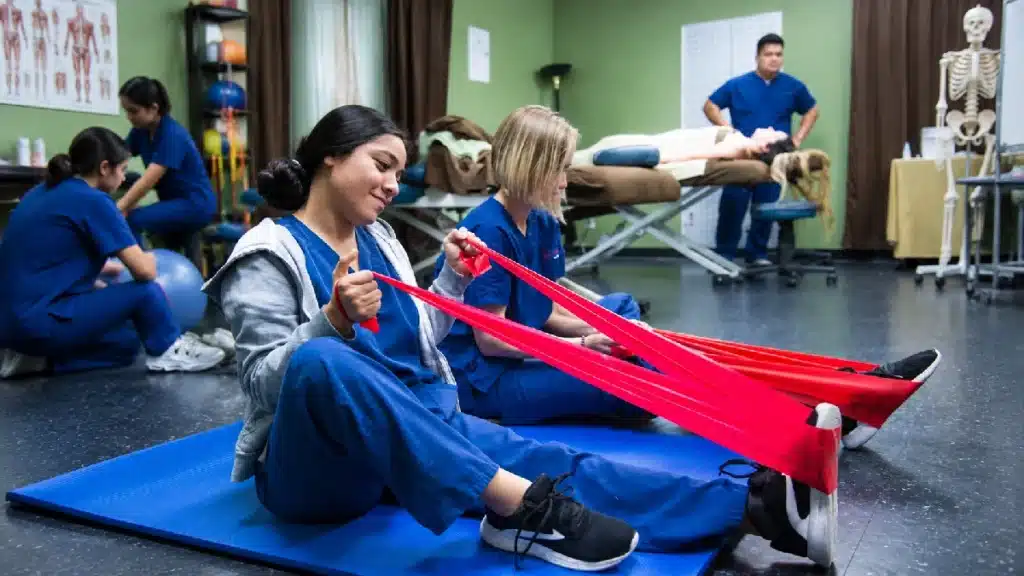
At American College of Healthcare & Technology (ACHT), students receive hands-on training designed to help them build confidence for real healthcare environments.
Through practical learning experiences, students develop skills such as:
- Patient communication
- Clinical procedures
- Workplace professionalism
- Team collaboration
Programs such as Medical Assistant training and other healthcare programs help students gain practical experience and prepare for professional opportunities.
Whether you are preparing for a career as a Medical Assistant, Surgical Technologist, Dental Assistant, Veterinary Assistant, or another healthcare professional, building confidence and communication skills can make a difference when meeting employers.
Ready to start building your healthcare career? Explore ACHT programs and discover training options designed to prepare students for real-world healthcare opportunities.
Ready to start your healthcare career?
Get program details, admission requirements, and personalized guidance from our team.
Request Program Information →Frequently Asked Questions About Group Interviews
What is the best way to stand out in a group interview?
The best way to stand out is to participate confidently while showing teamwork. Employers value candidates who communicate clearly, listen to others, and contribute helpful ideas.
How do you introduce yourself in a group interview?
Introduce yourself briefly with your name, background, and career interest. Keep your introduction professional and connected to the position you are applying for.
Are group interviews common for healthcare jobs?
Many healthcare employers use interviews that evaluate communication, teamwork, and problem-solving skills because healthcare professionals work closely with patients and other team members.
Can healthcare graduates succeed in interviews without work experience?
Yes. New graduates can highlight their education, hands-on training, externships, and the professional skills they developed during their program.
What should I avoid saying in a group interview?
Avoid negative comments about previous employers, interrupting other candidates, giving unclear answers, or trying to compete instead of collaborate.