



A career in healthcare does not always mean working in an examination room. If you enjoy helping people, staying organized, and solving problems, becoming a medical administrative assistant could offer a rewarding way to contribute to patient care without performing clinical procedures.
Medical administrative assistants help healthcare facilities operate efficiently. They coordinate appointments, communicate with patients, manage records, and support the administrative processes that allow doctors and other healthcare professionals to focus on delivering care.
But is medical administrative assisting a good career in 2026? What are the benefits, how much can you earn, and what opportunities are available in California?
This guide explores nine important benefits of a medical administrative assistant career, along with salary expectations, job outlook, potential challenges, and the training options worth considering before entering the field.
Quick Answer: Is Medical Administrative Assisting a Good Career?
Medical administrative assisting can be a good career for people who want to work in healthcare, prefer office-based responsibilities, and enjoy communicating with patients. Its main advantages include:
- Entering healthcare without typically needing a four-year degree
- Working in a variety of medical environments
- Helping patients without performing clinical procedures
- Developing transferable administrative and technology skills
- Exploring opportunities for professional advancement
- Building a foundation for other healthcare careers
According to the U.S. Bureau of Labor Statistics (BLS), medical secretaries and administrative assistants earned a median annual wage of $45,930 in May 2025, and employment in this occupation is projected to grow approximately 5% from 2025 to 2035.
These figures describe a closely related federal occupational classification, not guaranteed outcomes for individual medical administrative assistants.

Ready to start your healthcare career?
Get program details, admission requirements, and personalized guidance from our team.
Request Program Information →What Does a Medical Administrative Assistant Do?
A medical administrative assistant is a healthcare support professional who manages the organizational and clerical activities of a medical facility.
While nurses, physicians, and clinical medical assistants focus on patient treatment and medical procedures, medical administrative assistants help coordinate the information, communication, and appointments necessary for those services.
Depending on their employer, daily responsibilities may include:
- Scheduling, rescheduling, and confirming patient appointments
- Welcoming patients and completing registration procedures
- Answering calls and responding to patient inquiries
- Updating electronic health records (EHRs)
- Verifying insurance information
- Processing payments and supporting billing workflows
- Organizing patient documentation
- Coordinating referrals and follow-up appointments
- Protecting confidential patient information
For example, imagine a patient visiting a clinic for the first time. A medical administrative assistant may help the patient complete registration, verify insurance details, confirm the appointment, and ensure the healthcare team has the appropriate records.
These responsibilities might appear routine, but they directly affect the patient’s experience and the efficiency of the entire medical office.
In simple terms: Medical administrative assistants make healthcare easier to access, organize, and navigate.

9 Benefits of a Career as a Medical Administrative Assistant
A career as a medical administrative assistant offers more than just an opportunity to work in healthcare. From career growth and job opportunities to developing valuable professional skills, here are nine benefits worth considering.
1. Enter the Healthcare Field Without a Four-Year Degree
One of the biggest benefits of becoming a medical administrative assistant is that you typically don’t need a four-year college degree. Many entry-level positions require a high school diploma or equivalent, although employers may prefer candidates with specialized training.
Medical administrative assistant training can help you develop practical skills in medical terminology, patient scheduling, electronic health records, and office procedures, making it easier to prepare for healthcare office responsibilities.
Ready to start your healthcare career?
Get program details, admission requirements, and personalized guidance from our team.
Request Program Information →2. Work in a Growing Healthcare Career
Medical administrative assistants play an important role in keeping healthcare facilities organized and efficient. According to the U.S. Bureau of Labor Statistics (BLS), employment of medical secretaries and administrative assistants is projected to grow by approximately 5% from 2025 to 2035.
This positive job outlook makes medical administration a career worth exploring, especially for people interested in working in the healthcare industry.
3. Make a Difference in Patients’ Lives Without Clinical Procedures
You don’t need to perform medical procedures to make a positive difference in patients’ lives. Medical administrative assistants help patients schedule appointments, complete paperwork, understand office procedures, and navigate their healthcare visits.
By providing friendly communication and organized support, you can help patients feel more comfortable while allowing healthcare professionals to focus on clinical care.
4. Work in Different Healthcare Settings
One advantage of a medical administrative assistant career is the flexibility to explore different healthcare workplaces. Depending on your skills and experience, you may find opportunities in:
- Hospitals and medical centers
- Physician offices
- Outpatient clinics
- Specialty medical practices
- Diagnostic facilities
- Community health centers
Each workplace offers different responsibilities and opportunities to gain experience, allowing you to explore the healthcare environment that best fits your interests.
5. Develop Valuable Healthcare Administrative Skills
Working as a medical administrative assistant helps you build professional skills that are useful across different healthcare careers.
Some of the most valuable skills include:
- Patient communication: Helping patients with questions and appointments.
- Electronic health records: Managing patient information accurately.
- Scheduling: Organizing appointments and office workflows.
- Insurance knowledge: Understanding basic insurance and billing procedures.
- Time management: Handling multiple responsibilities efficiently.
These transferable skills can also support future opportunities in medical records, patient coordination, and healthcare administration.
6. Explore Medical Administrative Assistant Career Advancement Opportunities
A medical administrative assistant position can be a starting point for other healthcare careers. With experience and additional education, you may qualify for positions such as:
- Senior Medical Administrative Assistant
- Patient Services Coordinator
- Medical Office Supervisor
- Medical Records Specialist
- Medical Billing Specialist
- Healthcare Office Manager
If you enjoy working with insurance claims and healthcare documentation, for example, you may consider specialized education in Medical Billing and Coding to explore additional career opportunities.
7. Enjoy a Professional Office-Based Healthcare Career
If you prefer administrative responsibilities over hands-on medical procedures, medical administrative assisting may be a good fit. Most positions involve working with computers, scheduling appointments, organizing patient records, and communicating with patients.
Although medical offices can be busy, this career allows you to contribute to healthcare without routinely performing clinical procedures such as taking blood samples or administering injections.
8. Gain Experience With Modern Healthcare Technology
Healthcare facilities use digital systems to manage appointments, patient records, insurance information, and daily operations. Medical administrative assistants frequently work with these technologies.
Learning electronic health records (EHR), scheduling software, and patient management systems can help you become more efficient and develop technical skills that are valuable in modern healthcare workplaces.
9. Choose a Healthcare Career That Matches Your Strengths
Medical administrative assisting can be a rewarding career if you enjoy helping people, staying organized, and working in a professional healthcare environment.
This career may be right for you if you:
- Enjoy communicating with patients
- Have strong organizational skills
- Feel comfortable using computers
- Pay attention to details
- Prefer office-based work over clinical procedures
If these qualities describe you, medical administrative assisting could be a career worth exploring. If you also enjoy hands-on patient care, consider learning about Medical Assistant training at ACHT to compare your options.
Ready to start your healthcare career?
Get program details, admission requirements, and personalized guidance from our team.
Request Program Information →
Is a Medical Administrative Assistant Career Right for You?
Before pursuing medical administrative assisting, think carefully about what motivates you. You may find this career appealing if you enjoy supporting patients, working with computers, organizing information, and managing several responsibilities.
On the other hand, if you want to perform clinical procedures, take vital signs, or assist directly with examinations, medical assistant training may align more closely with your interests. If you prefer working primarily with medical documentation, coding, and reimbursement systems, a medical billing and coding pathway may be more relevant.
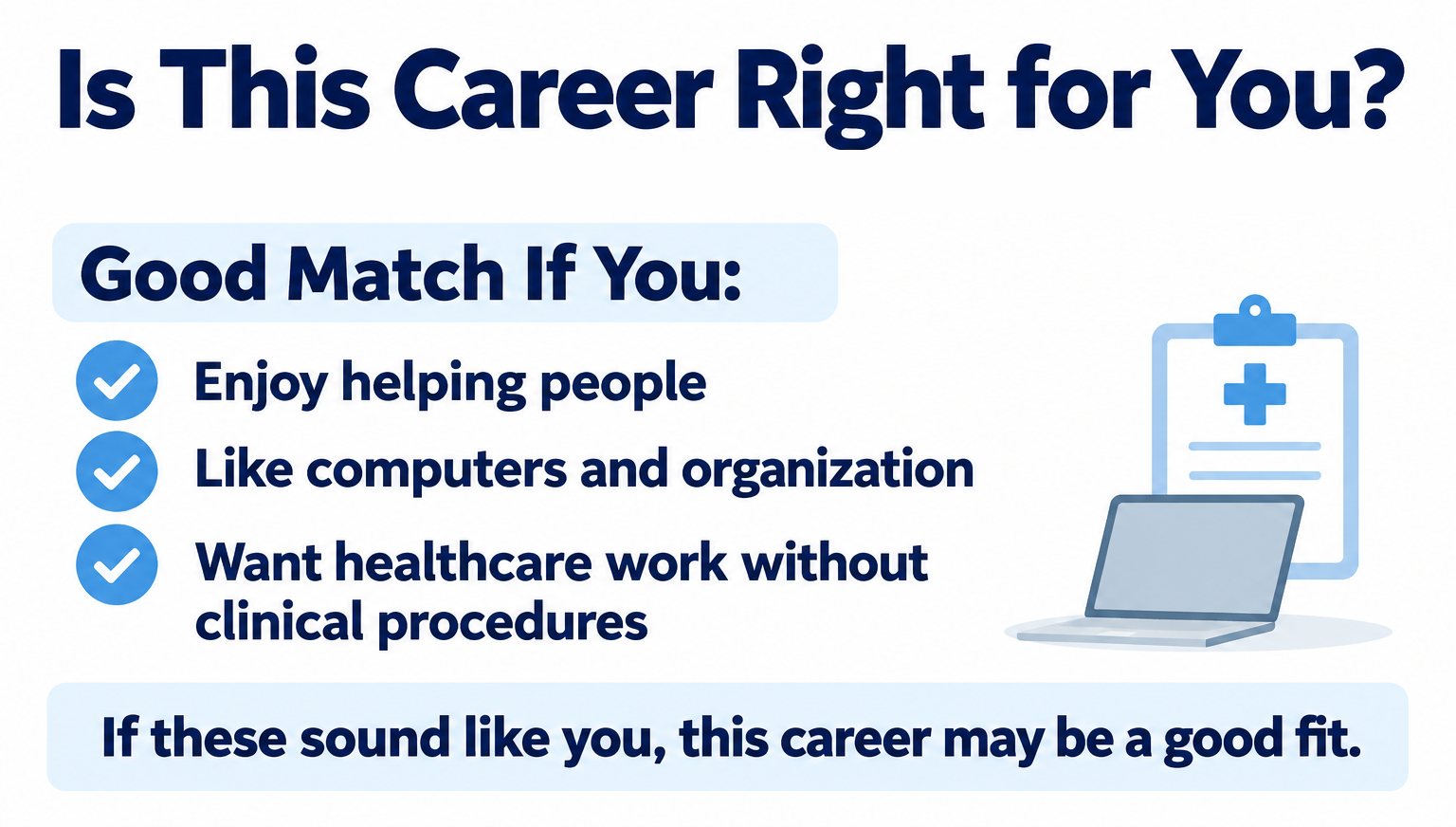
A Quick Career-Fit Checklist
Ask yourself:
- Do I enjoy helping people through communication and organization?
- Am I comfortable using computers for much of the workday?
- Can I manage a busy environment and changing priorities?
- Am I interested in healthcare without necessarily performing clinical procedures?
- Would I enjoy learning medical terminology and administrative processes?
- Am I willing to handle sensitive information carefully?
If most of your answers are yes, medical administrative assisting may be worth exploring. If you are more interested in clinical responsibilities, compare the training and career opportunities available in medical assisting before making a decision.